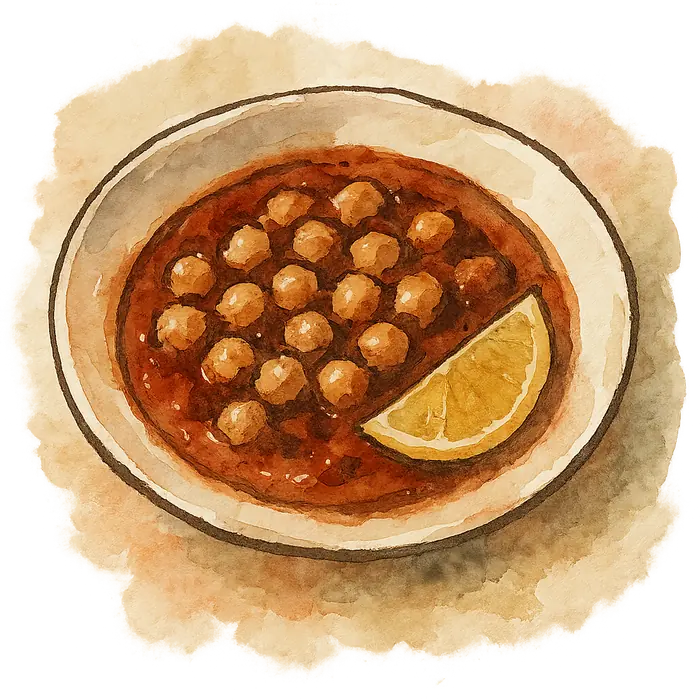
A watercolour of whole pale chickpeas in a dark spiced tomato sauce, thick and clinging
Generated with OpenAI gpt-image-1
Adapted from Chana masala

Chana masala from dried chickpeas

An established dish converted to shelf-stable ingredients. Every substitution is documented below.

How long it keeps

About 6 months, set by Vegetable oil (sunflower or rapeseed).

Indicative, for planning a build before you buy. The answer for a pack you already own is the best before date printed on it, and that only holds if it has been stored as the label says.

Serves
4
Burners
1
Pans
1
Water
1.4 L
Active
15 min
Total
75 min

Ingredients

Dried chickpeas rather than tinned, because this is the dish where the difference is most obvious: tinned are soft all the way through, dried cooked properly hold their shape and have a nutty centre.

It costs a soak and an hour of fuel, which is why this is a pantry recipe rather than a trip one.

  1. Soak overnight in plenty of cold water. They roughly double. The ratios and the reasons are on pulse rehydration.
  2. Drain, fresh water, bring to the boil and simmer 45 to 60 minutes until they give when pressed. Keep a mugful of the cooking water.
  3. Separate pan or the same one wiped out: oil, dried onion, garlic and ginger for three minutes.
  4. Cumin, turmeric and curry powder, twenty seconds.
  5. Passata in with the salt. Cook it down hard for ten minutes before the chickpeas join it. This is where the depth comes from and it is the step most often rushed.
  6. Chickpeas in with a splash of their water. Fifteen minutes more.
  7. Lemon juice off the heat, not in the pan. Cooked sour tastes dull.

Serves 4 with rice or flatbread.

What this was adapted from

Chana masala: the North Indian dish of chickpeas stewed in a spiced tomato base

  • fresh onion, ginger and garlic → dried onion, ground ginger and garlic granules

    The base is cooked down until it stops tasting raw, which is exactly what rehydrating dried alliums in fat achieves. Ground ginger is flatter than fresh and slightly warmer, which suits the dish.

  • fresh tomatoes and tamarind → passata and bottled lemon juice

    The tomato is cooked to a paste either way, so passata starts you most of the way there. Tamarind is the sour note; lemon juice is sharper and less fruity, added at the end rather than cooked in.