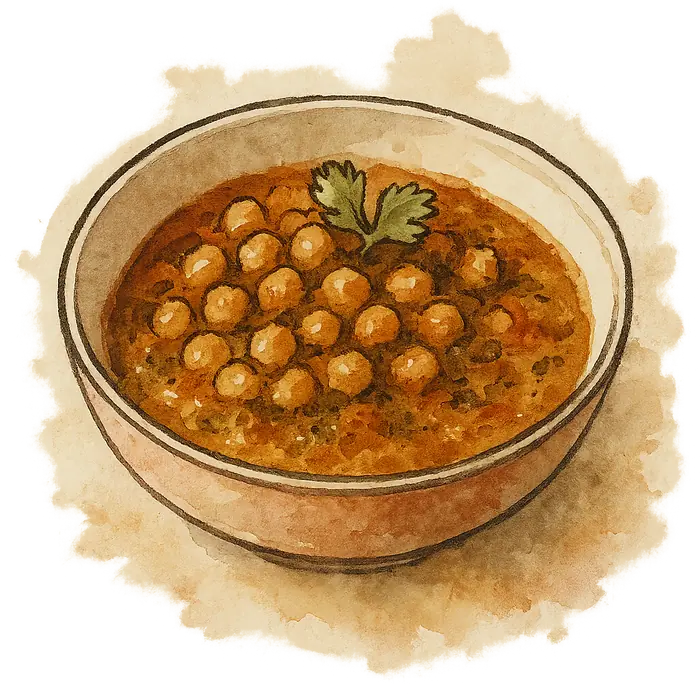
A watercolour of a bowl of chickpeas in a thick golden-brown curry sauce flecked with spice
Generated with OpenAI gpt-image-1
Adapted from Chana masala

Chickpea and tomato curry

An established dish converted to shelf-stable ingredients. Every substitution is documented below.

How long it keeps

About 6 months, set by Vegetable oil (sunflower or rapeseed).

Indicative, for planning a build before you buy. The answer for a pack you already own is the best before date printed on it, and that only holds if it has been stored as the label says.

Serves
4
Burners
1
Pans
1
Water
0.3 L
Active
12 min
Total
30 min

Ingredients

Curry powder has a poor reputation, most of which it earns by being stirred into liquid instead of fried. Bloom it: thirty seconds in hot fat before anything wet arrives, and it stops tasting dusty and starts tasting cooked.

  1. Oil in the pan, dried onion for three minutes until it smells sweet.
  2. Curry powder, ginger, garlic and turmeric in. Thirty seconds, stirring constantly, and take the pan off the heat if it looks like catching. Burnt spice cannot be rescued.
  3. Tomatoes in immediately: they stop the spices cooking further. Cook down hard for 10 minutes until the colour turns from red to brick.
  4. Chickpeas with about half their liquid. Simmer 12 minutes, crushing a third of them against the pan so the sauce thickens.
  5. Salt, then lemon juice off the heat. Taste for acid twice.

Serves 4 with rice or flatbread. With rice, cook it to the number eating. See the rice page.

What this was adapted from

Chana masala: the North Indian chickpea curry

  • a ground spice blend made fresh → shop-bought curry powder, bloomed hard

    The original builds its own blend and the difference is real. Curry powder is one ingredient instead of eight and it goes stale in a way whole spices do not -- but bloomed properly in hot fat for thirty seconds it is a great deal better than its reputation.

  • fresh ginger, garlic and coriander → ground ginger, garlic granules and extra lemon

    None of the fresh aromatics keep. Ground ginger is warm rather than sharp and granules are sweet rather than pungent, so the dish is rounder and less bright -- and takes more acid at the end to compensate.