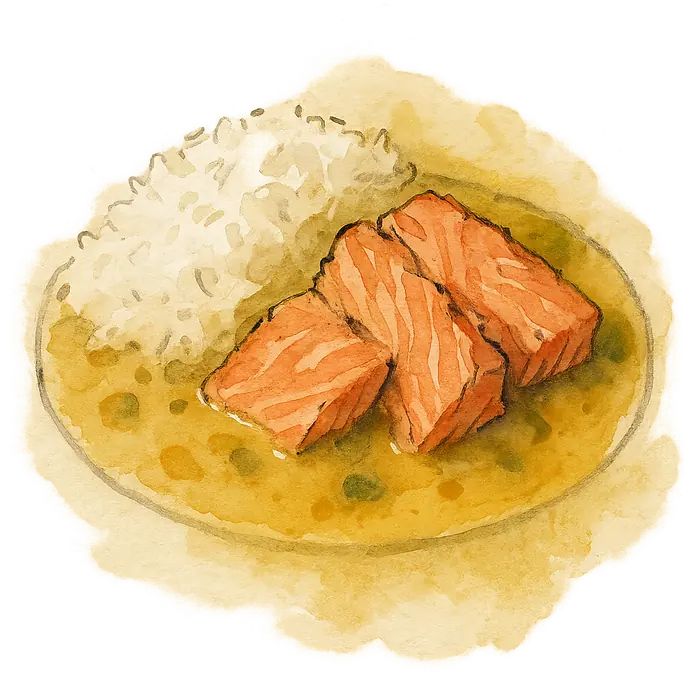
A watercolour of large pink flakes of salmon in a pale yellow coconut curry beside white rice
Generated with OpenAI gpt-image-1
Adapted from Sri Lankan and South Indian coconut fish curries finished with sour fruit rather than tomato

Coconut and lemon fish curry

An established dish converted to shelf-stable ingredients. Every substitution is documented below.

How long it keeps

About 6 months, set by Vegetable oil (sunflower or rapeseed).

Indicative, for planning a build before you buy. The answer for a pack you already own is the best before date printed on it, and that only holds if it has been stored as the label says.

Serves
3
Burners
1
Pans
2
Water
0.7 L
Active
10 min
Total
28 min

Ingredients

  1. Rice on.
  2. Oil, dried onion two minutes. Curry powder, turmeric and chilli, twenty seconds.
  3. Coconut cream in with 100 ml water and the salt. A bare simmer only. Coconut cream splits at a hard boil and will not come back.
  4. Eight minutes to thicken.
  5. Pan off the heat. Salmon in large flakes, folded twice.
  6. Lemon juice stirred through at the very end, then tasted. It will want more than you expect.

Adding the acid off the heat is the rule for every coconut dish here. Lemon juice into a simmering coconut sauce will curdle it, and there is no recovering that.

Serves 3.

What this was adapted from

Sri Lankan and South Indian coconut fish curries finished with sour fruit rather than tomato

  • fresh white fish, simmered in the sauce → tinned salmon, folded in at the end

    Fresh fish poaches in the sauce and holds together. Tinned salmon is already cooked and will collapse, so it goes in off the heat in large pieces. The bones are soft and edible and worth leaving in.

  • fresh lime and curry leaves → bottled lemon juice

    Lime is sharper and more floral than lemon, and curry leaves have no substitute at all. This is the widest gap between this version and the original, and the dish is simpler for it.