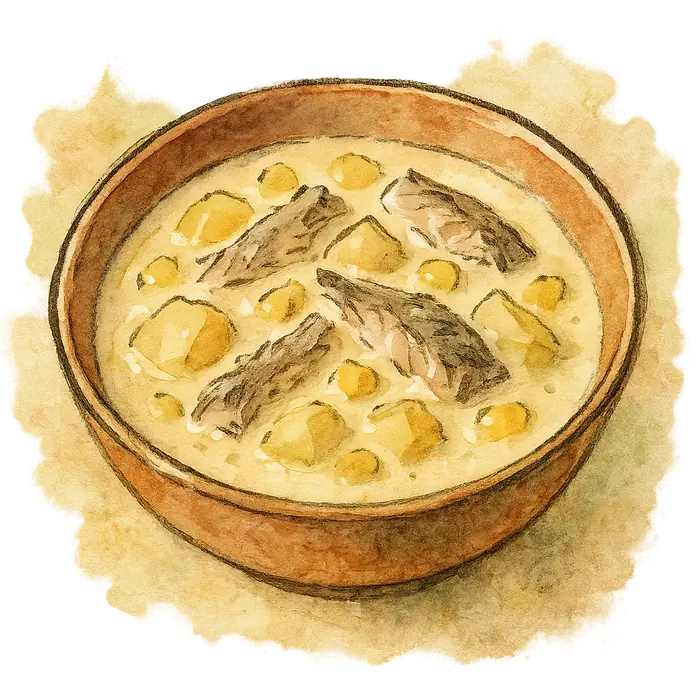
A watercolour of a bowl of pale creamy chowder with chunks of potato, yellow sweetcorn and flakes of grey-brown mackerel
Generated with OpenAI gpt-image-1
Adapted from New England chowder

Tinned fish chowder

An established dish converted to shelf-stable ingredients. Every substitution is documented below.

How long it keeps

About 6 months, set by Olive oil.

Indicative, for planning a build before you buy. The answer for a pack you already own is the best before date printed on it, and that only holds if it has been stored as the label says.

Serves
4
Burners
1
Pans
1
Water
0.6 L
Active
12 min
Total
25 min

Ingredients

Slake the cornflour first. Mix it to a smooth paste with a few spoonfuls of cold water before it goes anywhere near the pan. Tipped in dry it lumps and there is no recovering it.

  1. Oil in the pan, dried onion three minutes until sweet-smelling.
  2. 400 ml water and the stock cube. Drained potatoes in, crushed roughly against the pan so some of them thicken the soup.
  3. Evaporated milk and drained sweetcorn in. Bring to a bare simmer: a hard boil will make it grainy.
  4. Cornflour paste stirred in. Two minutes until it thickens visibly.
  5. Off the heat, flake in the drained mackerel with plenty of black pepper. Ninety seconds in the residual heat is enough.

Pepper matters more here than in almost anything else on the site. Chowder without a lot of it tastes of nothing but milk.

Serves 4.

What this was adapted from

New England chowder: the milk-and-potato fish soup

  • fresh milk and cream → evaporated milk and a little cornflour

    Chowder is a dairy soup, so this is the whole dish. Evaporated milk is richer than reconstituted powder and does not split at a simmer the way fresh milk can; cornflour puts back the body the cream would have given.

  • fresh haddock or cod → tinned mackerel, added off the heat

    Fresh white fish poaches in the soup in four minutes. Tinned mackerel is already cooked and disintegrates if simmered, so it goes in at the end -- oilier and stronger-flavoured than the original, which changes the dish rather than approximating it.