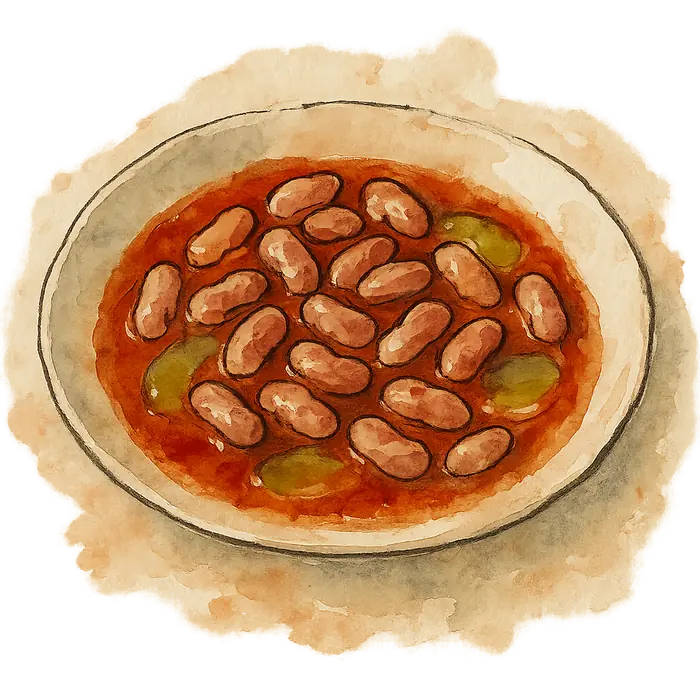
A watercolour of speckled pink-brown borlotti beans in a rich red tomato sauce with olive oil on top
Generated with OpenAI gpt-image-1
Adapted from Fagioli all uccelletto

Borlotti beans in tomato

An established dish converted to shelf-stable ingredients. Every substitution is documented below.

How long it keeps

About 6 months, set by Olive oil.

Indicative, for planning a build before you buy. The answer for a pack you already own is the best before date printed on it, and that only holds if it has been stored as the label says.

Serves
4
Burners
1
Pans
1
Water
1.6 L
Active
12 min
Total
90 min

Ingredients

Read this before cooking borlotti from dried. Borlotti are one of the beans that carry phytohaemagglutinin, and the handling is not optional: soak, drain, then a hard rolling boil in fresh water. The full instruction and its source are on kidney beans and the slow cooker trap, and it applies to these in the same way.

  1. Soak overnight in plenty of cold water.
  2. Drain, and do not cook them in the soaking water.
  3. Fresh water, a real rolling boil for at least 30 minutes, not a simmer. Then continue at a simmer until tender, usually another 20 to 30 minutes.
  4. Drain, keeping a little of the liquid.
  5. Oil in the pan, garlic granules and herbs thirty seconds. Passata in, salt, chilli. Cooked down for ten minutes.
  6. Beans in with a splash of their water. Twenty minutes at a bare simmer so they take on the tomato.

Finished with a thread of oil over each bowl. The oil is not a garnish here, it is the fat the dish is missing without it.

Serves 4.

What this was adapted from

Fagioli all uccelletto: the Tuscan dish of beans stewed with tomato, garlic and sage

  • fresh sage → dried mixed herbs

    Sage is the signature and dried sage alone is dusty. Mixed herbs give a rounder background that suits the tomato, and the dish is honest about being a version rather than the thing.

  • fresh garlic in oil → garlic granules bloomed in the oil

    Same job, and granules do not sprout or soften in a locker. They need fat and thirty seconds of heat to stop tasting powdery.