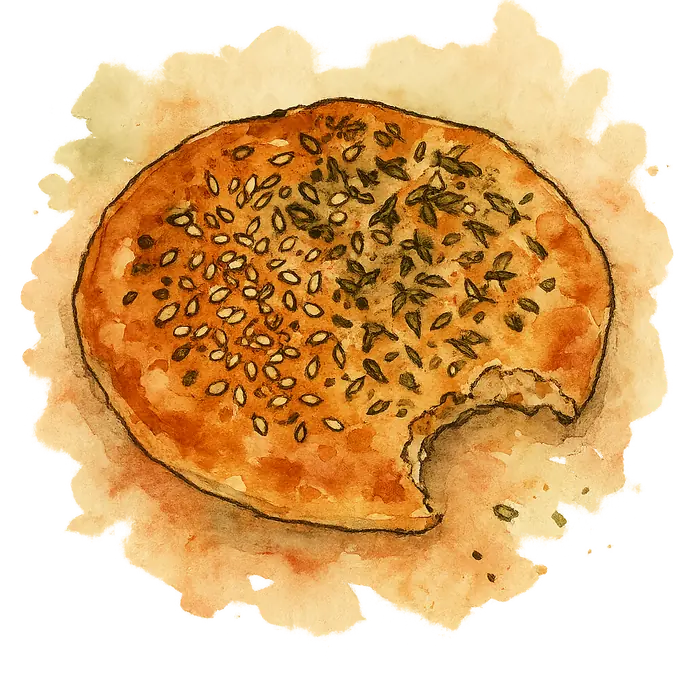
A watercolour of a flatbread crusted with toasted sesame seeds and dried herbs, torn at one edge
Generated with OpenAI gpt-image-1
Adapted from Za'atar and seeded flatbreads across the Levant

Seeded and spiced flatbread

An established dish converted to shelf-stable ingredients. Every substitution is documented below.

How long it keeps

About 6 months, set by Plain flour.

Indicative, for planning a build before you buy. The answer for a pack you already own is the best before date printed on it, and that only holds if it has been stored as the label says.

Serves
4
Burners
1
Pans
1
Water
0.3 L
Active
18 min
Total
30 min

Ingredients

The plain flatbread with the seeds and herbs pressed into the surface rather than mixed through the dough, which is what gets them toasted rather than steamed.

  1. Toast the sesame seeds dry in the pan for two minutes until they colour and start to smell nutty. Tip out and mix with the herbs and cumin.
  2. Make the dough as for the plain bread: 250 g flour, salt, about 150 ml water. Knead a minute, rest 10.
  3. Divide in four and press thin.
  4. Brush each with oil and press the seed mixture firmly into the surface. Press, do not sprinkle, or it all ends up in the pan.
  5. Dry pan, seeded side down first, 60 seconds. Turn, another 60.
  6. Lemon juice over while hot.

Seed side down first is the whole technique: it toasts against the metal instead of sitting on top going soft.

Makes 4.

What this was adapted from

Za'atar and seeded flatbreads across the Levant

  • za'atar with fresh thyme and sumac → dried mixed herbs, sesame and a squeeze of lemon

    Za'atar is thyme, sumac and sesame, and sumac in particular has no substitute -- it provides a sour fruitiness nothing else in this cupboard does. Sesame and herbs give two of the three notes; lemon juice on the finished bread stands in, crudely, for the third.