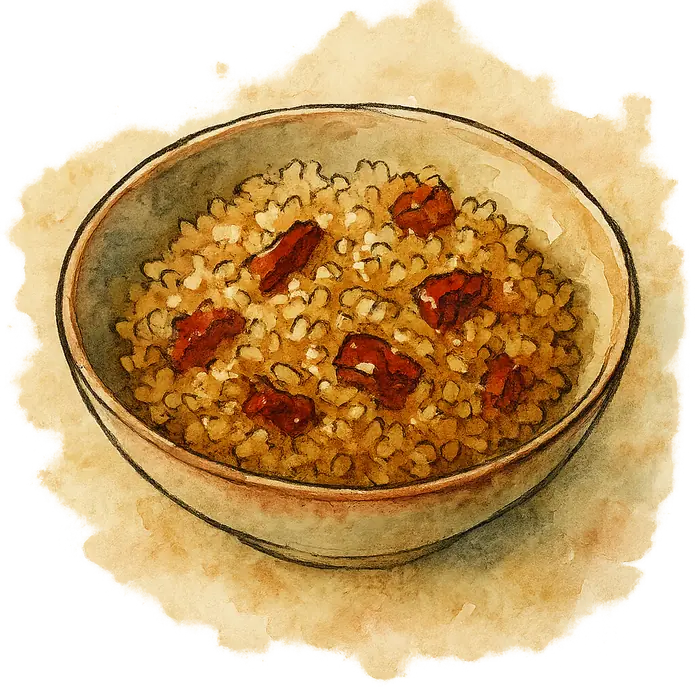
A watercolour of pale bulgur wheat studded with dark red sun-dried tomato, glossy with oil
Generated with OpenAI gpt-image-1
Adapted from Tabbouleh

Bulgur and tomato salad

An established dish converted to shelf-stable ingredients. Every substitution is documented below.

How long it keeps

About 6 months, set by Bulgur wheat.

Indicative, for planning a build before you buy. The answer for a pack you already own is the best before date printed on it, and that only holds if it has been stored as the label says.

Serves
4
Burners
1
Pans
1
Water
0.4 L
Active
10 min
Total
25 min

Ingredients

Bulgur needs no cooking, only hot water and twenty minutes, which makes it the most fuel-efficient grain in the cupboard.

  1. Bulgur into a bowl. Boiling water to about 1.5 times its volume, poured over, and a plate on top.
  2. Twenty minutes. It absorbs everything and roughly doubles.
  3. Dried onion and herbs go in with the water, not after. They rehydrate in it.
  4. Forked through, then sun-dried tomatoes chopped small, oil, lemon, salt and a lot of pepper.

Dress it while it is still warm. Warm grains take on dressing and cold ones sit in it, which is true of every grain salad and most often ignored.

Better after thirty minutes standing, which makes this the rare dish here that improves while you set up camp.

Serves 4.

What this was adapted from

Tabbouleh: the Levantine salad of soaked bulgur with a great deal of parsley, tomato and lemon

  • a large quantity of fresh parsley and mint → dried mixed herbs, in much smaller quantity

    Real tabbouleh is a herb salad with some bulgur in it, not the reverse. Without fresh herbs that dish is simply not available, so this inverts the ratio honestly and becomes a grain salad with a herb note.

  • fresh tomatoes → sun-dried tomatoes, chopped small

    Fresh tomato supplies water and sweetness; sun-dried supplies concentration and chew. The salad is denser and more savoury than the original and needs more lemon to lift it.