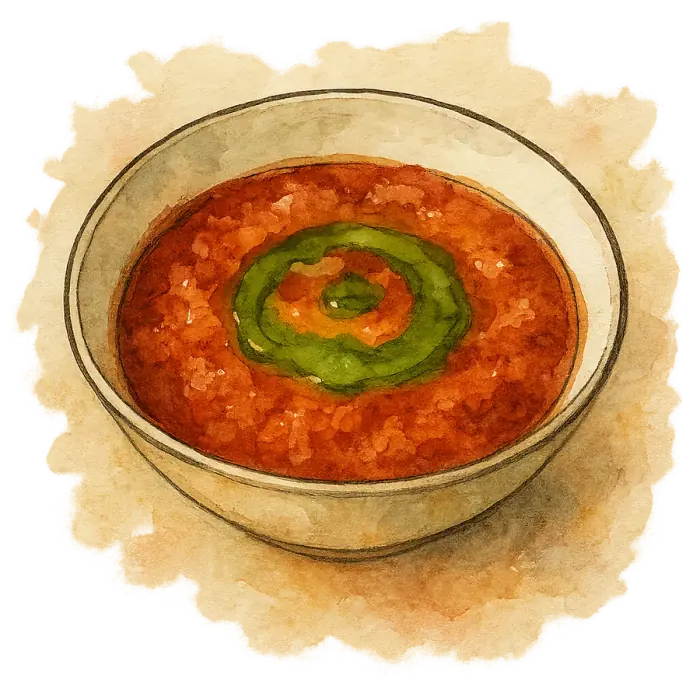
A watercolour of a thick dark red tomato and bread soup with olive oil poured over
Generated with OpenAI gpt-image-1
Adapted from Pappa al pomodoro

Tomato and flatbread soup

An established dish converted to shelf-stable ingredients. Every substitution is documented below.

How long it keeps

About 6 months, set by Plain flour.

Indicative, for planning a build before you buy. The answer for a pack you already own is the best before date printed on it, and that only holds if it has been stored as the label says.

Serves
2
Burners
1
Pans
1
Water
0.4 L
Active
15 min
Total
30 min

Ingredients

A soup made of tinned tomatoes, flour, oil and salt. Written down like that it sounds like hardship food, and eaten it is anything but, rich, thick, and far more than the sum of four cheap things.

Use whole plum tomatoes rather than chopped if you have the choice. Chopped tomatoes are usually made from lesser fruit and are often firmed up with calcium salts, which is why they keep their cubes; crushed by hand, plum tomatoes break down into something much softer.

  1. Make a flatbread first: 120 g flour, salt, about 75 ml water, kneaded briefly and cooked in the dry pan for 90 seconds a side. Set aside and tear into rough pieces.
  2. Same pan, oil in, garlic granules and oregano for thirty seconds.
  3. Tomatoes in, crushed in your hand as they go. Add about 200 ml water, salt, and simmer 15 minutes.
  4. Stir the torn bread through and cook another 5 minutes, breaking it up with the spoon. It should be thick enough that the spoon leaves a trail.
  5. Off the heat. A serious amount of olive oil over the top: more than feels reasonable. That is the dish.

Best eaten warm rather than hot, which also means it is forgiving about timing.

Serves 2.

What this was adapted from

Pappa al pomodoro: the Tuscan soup that uses stale bread as the thickener

  • stale sourdough → torn pieces of pan flatbread

    The original exists to use up bread that has gone hard. With no bread to go stale, the flatbread is made fresh and torn in: it thickens the same way, though the result is softer and less structured than the Tuscan version.

  • fresh basil → dried oregano

    Basil is the signature of the original and dried basil is genuinely poor. Rather than use a bad version of the right herb, this uses a good version of a different one, which changes the dish honestly rather than pretending.