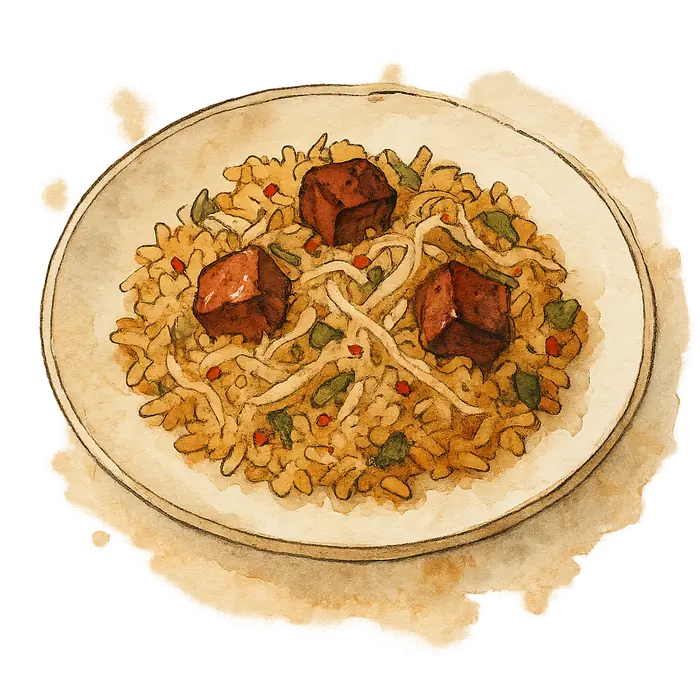
A watercolour of fried rice with dark cubes of tinned pork, pale sauerkraut strands, red chilli and sesame
Generated with OpenAI gpt-image-1
Adapted from Kimchi fried rice

Sauerkraut and luncheon meat rice

An established dish converted to shelf-stable ingredients. Every substitution is documented below.

How long it keeps

About 6 months, set by Vegetable oil (sunflower or rapeseed).

Indicative, for planning a build before you buy. The answer for a pack you already own is the best before date printed on it, and that only holds if it has been stored as the label says.

Serves
3
Burners
1
Pans
1
Water
0.6 L
Active
12 min
Total
30 min

Ingredients

Fried rice made with sour cabbage instead of vegetables you do not have. It is the single best thing sauerkraut does in this cupboard.

  1. Rice on to boil. Drain well and spread it out to stop cooking rather than leaving it in the hot pan.
  2. Meanwhile cube the luncheon meat small. Dry pan, no oil at first: it renders its own fat and browns better for it. Take it out once the edges are dark.
  3. Oil in, dried onion a minute, chilli flakes twenty seconds.
  4. Drained sauerkraut in. Fry it hard for three minutes until the liquid has gone and the edges catch. This is the step that makes the dish.
  5. Rice in, soy over, everything turned through for two minutes. Meat back. Sesame on top.

Cook the rice to the meal. Rice that has been cooked and then stood around is the specific hazard on this site, and it is worth reading properly: rice, reheating and cooking without a fridge.

Serves 3.

What this was adapted from

Kimchi fried rice: the Korean method of frying fermented cabbage with rice and tinned pork

  • kimchi → sauerkraut with chilli flakes and a little soy

    Both are salted fermented cabbage and both do the same work in the pan: sourness, funk and liquid that reduces down onto the grains. Sauerkraut lacks the chilli and the fish sauce, so the flakes and the soy stand in for those two notes specifically.