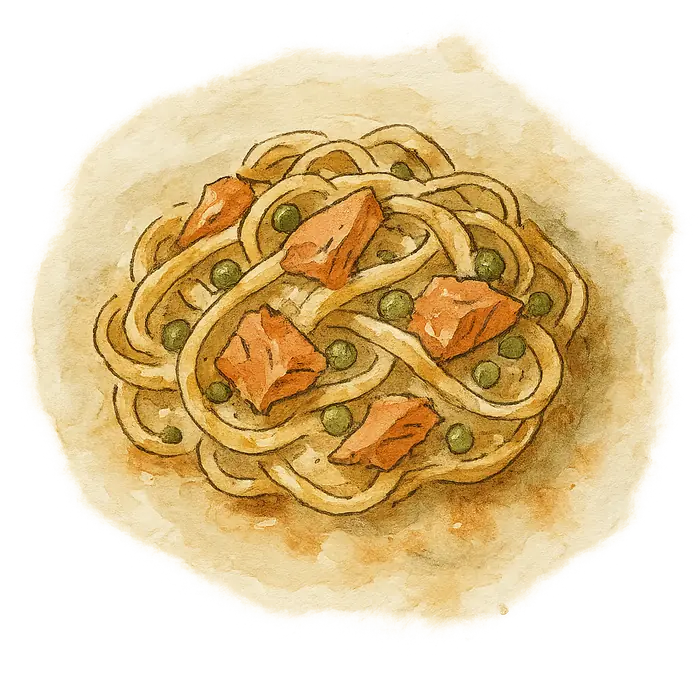
A watercolour of pasta in a pale creamy sauce with flakes of pink salmon and soft green peas
Generated with OpenAI gpt-image-1
Adapted from Salmon and pea pasta

Salmon and pea pasta

An established dish converted to shelf-stable ingredients. Every substitution is documented below.

How long it keeps

About 6 months, set by Olive oil.

Indicative, for planning a build before you buy. The answer for a pack you already own is the best before date printed on it, and that only holds if it has been stored as the label says.

Serves
3
Burners
1
Pans
1
Water
2 L
Active
12 min
Total
22 min

Ingredients

  1. Pasta on, water properly salted. Keep a mugful of the water.
  2. Slake the cornflour with a splash of cold water.
  3. In a second pan or after draining: oil, garlic granules twenty seconds. Drained peas in, crushed roughly against the pan.
  4. Evaporated milk and 100 ml of the pasta water. Bare simmer, not a boil. Cornflour paste in, two minutes until it thickens.
  5. Off the heat, flake in the drained salmon, lemon juice and a lot of pepper.
  6. Drained pasta turned through, loosened with more pasta water until glossy.

Salmon goes in off the heat for the same reason as every tinned fish here: it is already cooked, and simmering it turns it to dust.

Serves 3.

What this was adapted from

Salmon and pea pasta: the standard weeknight dish, built from tins

  • fresh salmon fillet and crème fraîche → tinned salmon and evaporated milk with cornflour

    The fresh version poaches salmon in a cream sauce. Tinned salmon is already cooked so it goes in at the end; evaporated milk thickened with cornflour gives a sauce that clings without splitting, though it is thinner and less tangy than crème fraîche.

  • frozen garden peas → tinned marrowfat peas, crushed

    Marrowfat peas are starchier and softer than garden peas -- crushed into the sauce they thicken it usefully, but the dish loses the sweet pop of a fresh pea entirely.