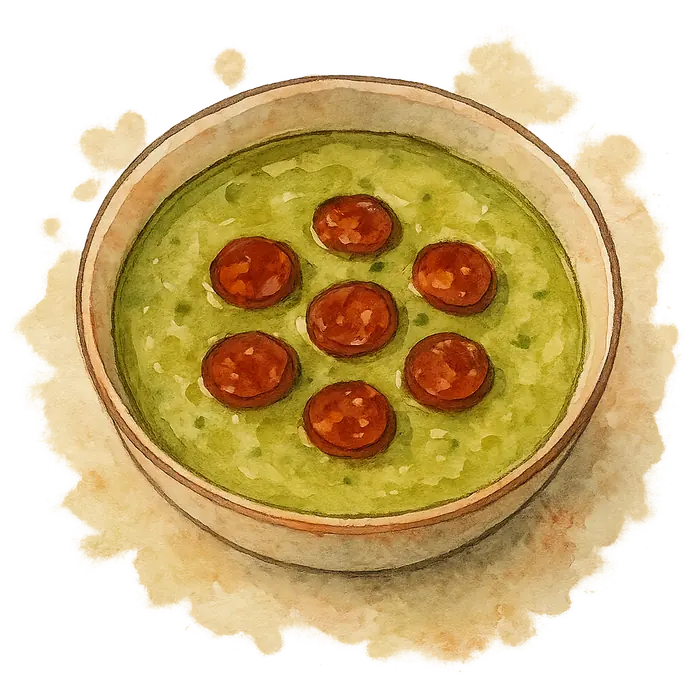
A watercolour of a thick pale green pea soup in a bowl with thin curled coins of dark red chorizo scattered on top
Generated with OpenAI gpt-image-1
Adapted from London particular

Marrowfat pea soup

An established dish converted to shelf-stable ingredients. Every substitution is documented below.

How long it keeps

About 6 months, set by Vegetable oil (sunflower or rapeseed).

Indicative, for planning a build before you buy. The answer for a pack you already own is the best before date printed on it, and that only holds if it has been stored as the label says.

Serves
4
Burners
1
Pans
1
Water
0.8 L
Active
10 min
Total
25 min

Ingredients

Thick enough that a spoon stands up in it, which is the traditional test and also the point.

  1. Slice the chorizo thin. Cold pan, barely any oil, medium heat, starting cold draws the fat out instead of searing it in. Five minutes until curled and the pan is red.
  2. Lift the chorizo out. Dried onion into the fat for three minutes.
  3. Peas in with their liquid, plus 600 ml of water and the stock cube. Bring to a simmer.
  4. Crush about half of them against the side of the pan with a spoon. This is what thickens it; there is no other thickener in the recipe.
  5. Simmer 10 minutes. Plenty of black pepper, lemon juice off the heat, chorizo scattered back over.

Taste before salting. Between the chorizo, the stock cube and the pea liquid there is usually more than enough.

Serves 4 as a starter, 2 as a substantial meal with flatbread.

What this was adapted from

London particular: the thick English split-pea and ham soup

  • split peas simmered for over an hour → tinned marrowfat peas, crushed

    The original is a long soak and a long simmer. Marrowfat peas are already soft and starchy enough to thicken a soup the moment you crush them, which turns ninety minutes into fifteen. It is smoother and less nutty than the real thing.

  • a ham hock → chorizo rendered at the start

    A hock gives salt, smoke and body over hours. Cured chorizo gives the first two in five minutes and its rendered fat carries them through the soup. Less body, so a little cornflour does that job instead.