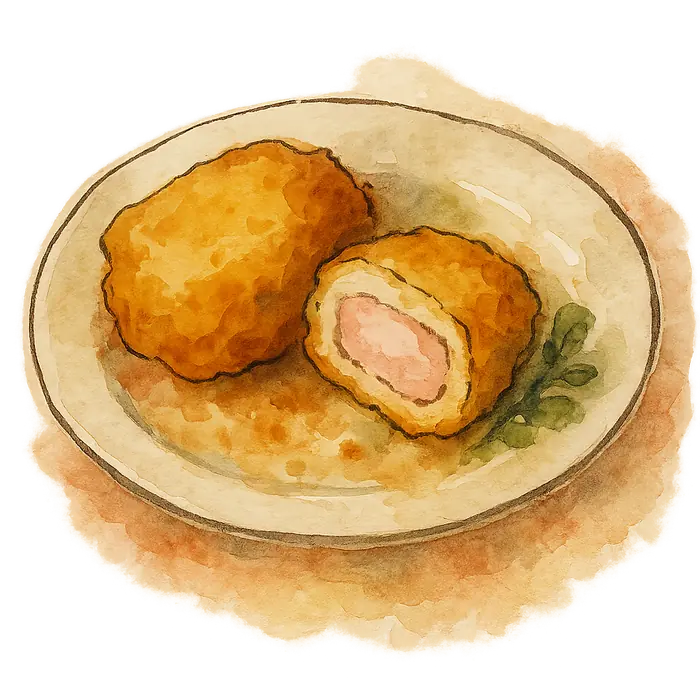
Unfashionable, extremely good, and the best argument on this site for keeping a tin of luncheon meat.
The batter is flour and water and nothing else. No egg, no raising agent. It should be the thickness of double cream: thick enough to cling to a wet slice of meat, thin enough to run off a spoon in a ribbon. Roughly 100 g of flour to 120 ml of water, added gradually, because flours vary.
- Batter mixed and left to stand while the oil heats. Standing lets the flour hydrate and the batter goes smoother.
- Luncheon meat cut into slices about 1 cm thick. Patted dry, or the batter slides off.
- Oil about 1 cm deep, properly hot. A drop of batter should sizzle immediately and rise. Too cool and the batter drinks oil and goes heavy.
- Each slice through the batter, let the excess run off, then straight in. Two to three minutes a side until deep gold and crisp.
- Drained on anything absorbent, salt and pepper, vinegar over.
Do not crowd the pan. Two at a time in a small pan, because the oil temperature drops as each one goes in and that is what makes a soggy fritter.
Batter contains uncooked flour, which is not safe to taste. Flour is a raw agricultural product and has been linked to outbreaks; see raw flour. It is fine the moment it is cooked through.
Serves 2.