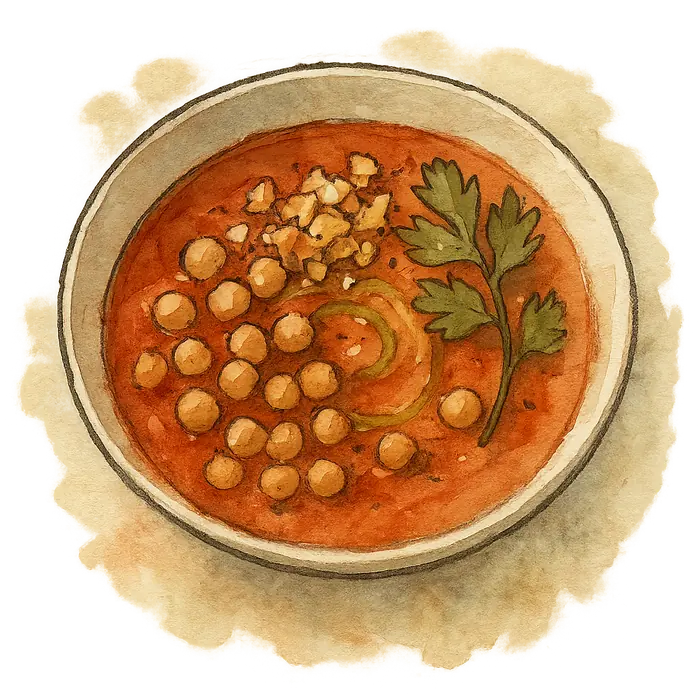
A watercolour of a bowl of rust-red chickpea soup with a swirl of olive oil and crushed crackers on top
Generated with OpenAI gpt-image-1
Adapted from Tunisian lablabi

Harissa and chickpea soup

An established dish converted to shelf-stable ingredients. Every substitution is documented below.

How long it keeps

About 6 months, set by Olive oil, though 1 of 8 ingredients has no sourced figure, so the real limit may be shorter.

Indicative, for planning a build before you buy. The answer for a pack you already own is the best before date printed on it, and that only holds if it has been stored as the label says.

Serves
4
Burners
1
Pans
1
Water
0.9 L
Active
8 min
Total
20 min

Ingredients

Soupier than the harissa chickpeas elsewhere on this site, and built to be poured over something dry that goes soft in it.

  1. Oil in the pan, garlic granules and cumin for twenty seconds, then the harissa fried for a full minute: frying the paste is what stops it tasting raw.
  2. Chickpeas with all their liquid, plus 600 ml water and the stock cube.
  3. Simmer 12 minutes. Crush about half the chickpeas against the pan.
  4. Lemon juice off the heat. Taste for salt after the crackers go in, not before.
  5. Crush the crackers into the bowls and pour the soup over. Eat within a few minutes, while they still have some structure.

A thread of olive oil over each bowl at the table is not optional in this dish: it is where a lot of the flavour sits.

Serves 4.

What this was adapted from

Tunisian lablabi: the chickpea soup poured over torn bread

  • day-old bread torn into the bowl → crushed crackers, or a flatbread torn in

    Lablabi is a bread soup: the bread is the body, not a side. Crackers crushed into the bowl do the same job and go soft the same way, though they bring salt with them so the soup needs less.

  • fresh garlic pounded raw into the broth → garlic granules bloomed in the oil

    The raw garlic hit is the signature of the original and nothing shelf-stable reproduces it. Bloomed granules give warmth instead of pungency, so the dish leans harder on the harissa and the lemon for its edge.