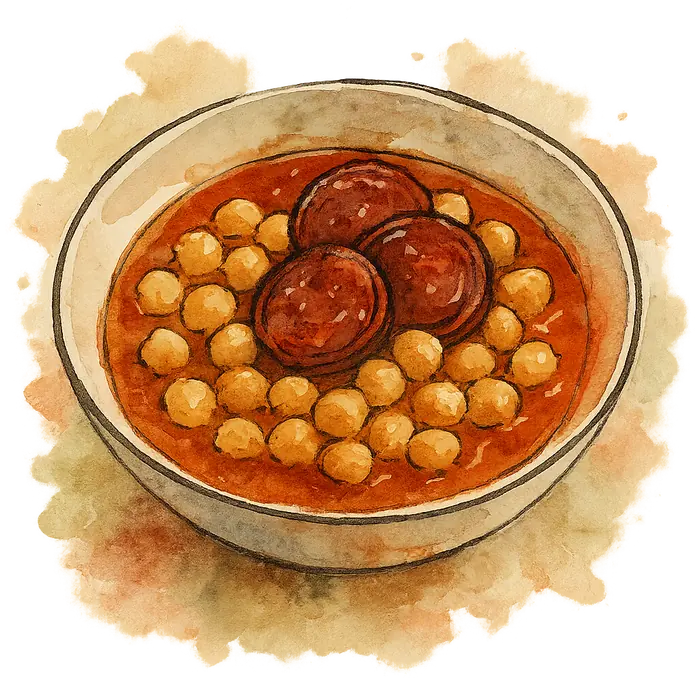
A watercolour of chickpeas and red chorizo coins in a brick-red paprika stew
Generated with OpenAI gpt-image-1
Adapted from Garbanzos con chorizo

Chorizo and chickpea stew

An established dish converted to shelf-stable ingredients. Every substitution is documented below.

How long it keeps

About 6 months, set by Olive oil.

Indicative, for planning a build before you buy. The answer for a pack you already own is the best before date printed on it, and that only holds if it has been stored as the label says.

Serves
4
Burners
1
Pans
1
Water
0.2 L
Active
12 min
Total
35 min

Ingredients

The best thing in this dish is not the chorizo, it is the fat that comes out of it. Everything after step one is cooked in that, and it is why the stew tastes like it simmered all afternoon.

Use barely any oil at the start. The sausage provides most of it.

  1. Slice the chorizo into thin coins. Cold pan, the merest film of oil, medium heat: starting cold is what draws the fat out rather than searing it in. Five or six minutes until the coins have curled and the pan is deep red.
  2. Lift the chorizo out and leave the fat. Dried onion into it for two or three minutes, then garlic and paprika for twenty seconds.
  3. Tomatoes in. Cook them down hard for ten minutes until the colour turns from red to brick: this is where the depth comes from and it is the step people cut short.
  4. Chickpeas with about half their liquid. Simmer 15 minutes, pressing some against the side of the pan so they thicken the stew.
  5. Chorizo back in for the last two minutes, then the vinegar off the heat.

Taste before adding any salt. Between the chorizo and the chickpea liquid there is usually enough.

Serves 4 with bread, 2 as a main on its own.

What this was adapted from

Garbanzos con chorizo: the Spanish stew that renders the sausage first and builds everything on that fat

  • fresh chorizo sausage → cured chorizo, vacuum-packed

    Cured chorizo is shelf-stable until cut, where fresh is not, and it renders the same deep paprika fat. It is firmer and saltier, so it goes in sliced thin and the dish needs no added salt.

  • fresh onion, garlic and parsley → dried onion and garlic, finished with vinegar

    The aromatics rehydrate in the rendered fat. Parsley is a freshness note nothing shelf-stable reproduces, so rather than fake it the dish takes a little more vinegar at the end.