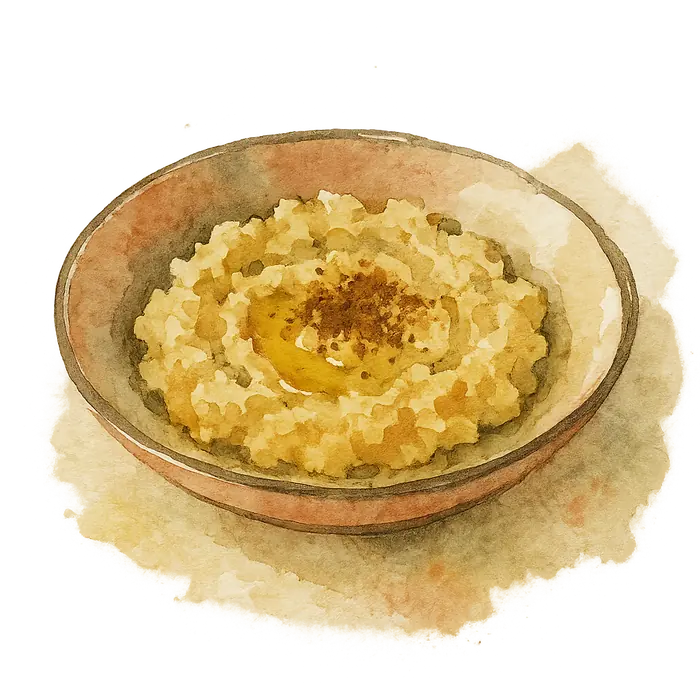
A watercolour of coarsely mashed chickpeas with olive oil pooled on top
Generated with OpenAI gpt-image-1
Adapted from Hummus

Chickpea and tahini mash

An established dish converted to shelf-stable ingredients. Every substitution is documented below.

How long it keeps

About 6 months, set by Olive oil.

Indicative, for planning a build before you buy. The answer for a pack you already own is the best before date printed on it, and that only holds if it has been stored as the label says.

Serves
3
Burners
0
Pans
0
Water
0.1 L
Active
8 min
Total
8 min

Ingredients

Not hummus, and it does not pretend to be. Hummus is smooth and this is not, because smooth needs a machine. What you get instead is coarse, nutty and a little rough, which on an oatcake is arguably the better texture anyway.

Keep the chickpea liquid. Drain them but save a few spoonfuls: it is starchy and it loosens the mash without thinning the flavour, which water does.

  1. Mash the drained chickpeas with a fork. Two minutes of real effort; you want most of them broken and a few left whole.
  2. Tahini, lemon juice, garlic granules, cumin and salt. Mash again.
  3. Trickle the oil in, stirring, then loosen with the reserved chickpea liquid a spoonful at a time until it drops from the spoon.

Tahini seizes when the acid hits it and looks wrong for about twenty seconds. Keep going: the liquid brings it back, the same way it does a seized chocolate sauce.

Serves 3 as a dip, 2 as a meal with crackers and gherkins.

What this was adapted from

Hummus: the Levantine purée, made by hand without a blender

  • a food processor and long-cooked dried chickpeas → tinned chickpeas mashed with a fork

    Without power, smooth hummus is not available. Tinned chickpeas mashed by hand give a coarse, rustic texture instead -- genuinely different, arguably better on a cracker, and it takes four minutes rather than an hour.

  • fresh garlic and lemon → garlic granules and bottled lemon juice

    Raw fresh garlic is the signature note and nothing shelf-stable reproduces its sharpness, so the dish leans harder on lemon and cumin instead. Granules bloomed briefly in the oil give warmth rather than bite.