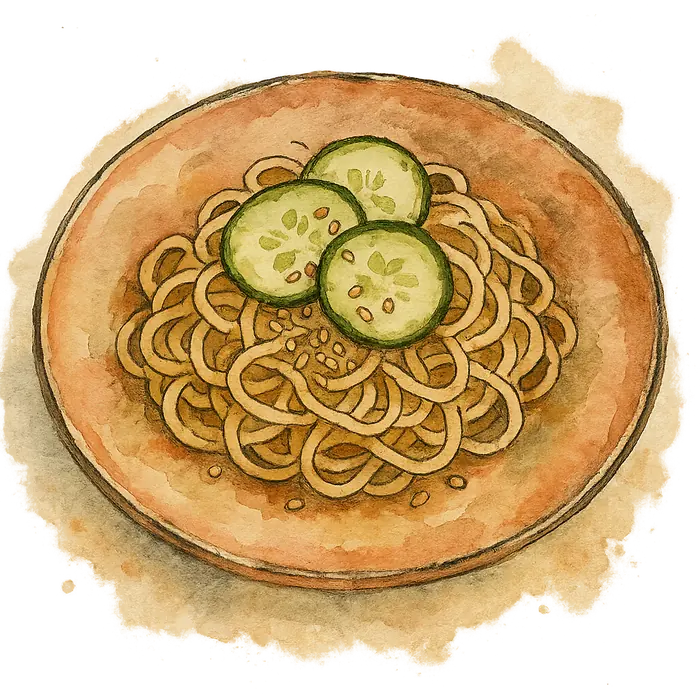
A watercolour of egg noodles in a pale miso and sesame dressing with gherkin slices and sesame
Generated with OpenAI gpt-image-1
Adapted from Japanese cold noodle dishes dressed with miso, sesame and vinegar rather than served in broth

Miso and sesame noodles

An established dish converted to shelf-stable ingredients. Every substitution is documented below.

How long it keeps

About 12 months, set by Tahini, though 1 of 9 ingredients has no sourced figure, so the real limit may be shorter.

Indicative, for planning a build before you buy. The answer for a pack you already own is the best before date printed on it, and that only holds if it has been stored as the label says.

Serves
2
Burners
1
Pans
1
Water
0.8 L
Active
10 min
Total
15 min

Ingredients

Miso does more for this cupboard than almost anything else in it, and most of what it does well happens off the heat.

  1. Noodles on. Drained and rinsed under cold water if you have it to spare, otherwise drained and spread out.
  2. Never boil miso. The dressing is made in the bowl: miso, tahini, soy, vinegar and honey worked together with a spoon, then loosened with three or four spoons of the hot noodle water until it pours.
  3. Sesame toasted dry for ninety seconds, watched.
  4. Noodles through the dressing, gherkins sliced thin over, sesame and chilli on top.

Tahini and miso are both thick and both split if you add liquid too fast. Work them together first, then loosen, and it stays smooth.

Good hot, and genuinely better at room temperature twenty minutes later.

Serves 2.

What this was adapted from

Japanese cold noodle dishes dressed with miso, sesame and vinegar rather than served in broth

  • rice vinegar and mirin → cider vinegar and a little honey

    Cider vinegar is sharper and fruitier than rice vinegar, so slightly less of it. Honey stands in for the sweetness mirin brings without any of its depth.

  • fresh spring onion and cucumber → gherkins, sliced thin

    Both bring crunch and acid. Gherkins are much more strongly flavoured, so they go in as an accent rather than as a vegetable.