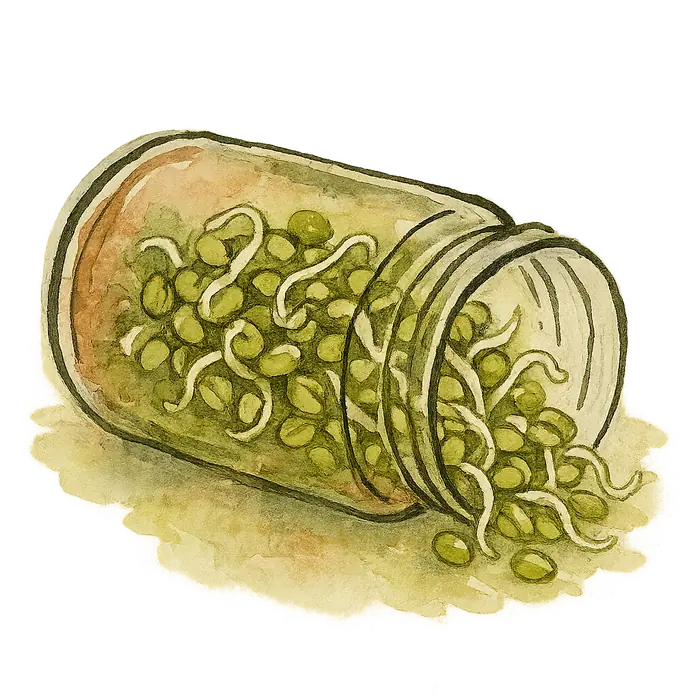
The only thing on this site that makes fresh food rather than storing it. A hundred grams of dry seed weighs nothing, keeps for a year, and becomes about half a kilogram of crisp green vegetable in three days using nothing but water.
Read the sprouting page before you start. The short version: contamination arrives on the seed, not from your kitchen, so buying seed sold for sprouting matters and cooking them is the reliable answer.
- Rinse 100 g of mung beans. Put them in a large jar and cover with three times their depth in water. Soak 8 to 12 hours.
- Drain completely. Cover the jar mouth with a square of cloth held on with a band.
- Rinse and drain twice a day, morning and evening. Leave the jar tilted mouth-down so it keeps draining: standing water is what turns a jar sour.
- Ready in 3 to 4 days, when the shoots are about the length of the bean.
Keep the jar out of direct sun and somewhere as cool as you have. Warmth speeds it up, and speeds up everything else in there too.
Throw the whole jar away if it smells sour, looks slimy, or has not got going after two days. Unlike most hazards on this site, here your senses are genuinely useful.
Makes about 400 g, roughly four servings. Cook them rather than eating them raw. See the safety page for who should never eat them raw at all.