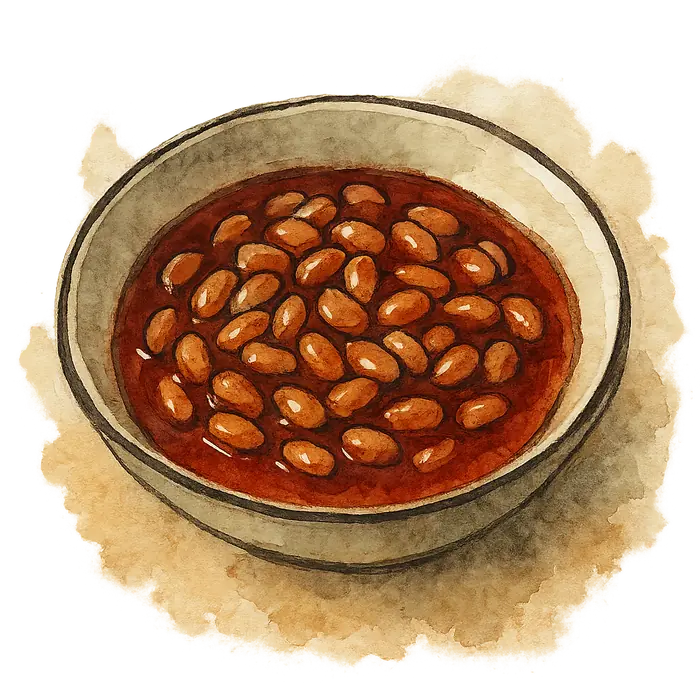
A watercolour of a bowl of baked beans in a dark red smoky sauce, glossier than from the tin
Generated with OpenAI gpt-image-1
Adapted from The standard British tin of baked beans, treated as a base rather than a finished dish

Baked beans worth eating

An established dish converted to shelf-stable ingredients. Every substitution is documented below.

How long it keeps

About 6 months, set by Vegetable oil (sunflower or rapeseed).

Indicative, for planning a build before you buy. The answer for a pack you already own is the best before date printed on it, and that only holds if it has been stored as the label says.

Serves
2
Burners
1
Pans
1
Water
0.05 L
Active
8 min
Total
12 min

Ingredients

Ten minutes and about thirty pence of cupboard ingredients turns a tin of beans from a component into something you would choose to eat.

What the tin is missing is smoke, acid and savoury depth. All three are in the spice box.

  1. Oil in the pan, dried onion three minutes until it smells sweet.
  2. Smoked paprika for twenty seconds: this is the single biggest change and it is why the tin tastes flat without it.
  3. Beans in with the mustard and Worcestershire sauce. Low heat, 5 minutes, stirring gently. Hard heat splits the sauce and breaks the beans.
  4. Malt vinegar and pepper off the heat.

The Worcestershire sauce is anchovy, tamarind and vinegar, which is exactly the savoury-sour depth industrial baked bean sauce lacks.

Serves 2 on flatbread or with a fried egg if you somehow have one.

What this was adapted from

The standard British tin of baked beans, treated as a base rather than a finished dish

  • a long-baked pot of beans with pork and molasses → a tin, fried aromatics and ten minutes

    Real baked beans are hours in an oven with salt pork and molasses. This is not that and does not pretend to be -- it takes the tin as a starting point and adds back the smoke, the acid and the depth that industrial production strips out.