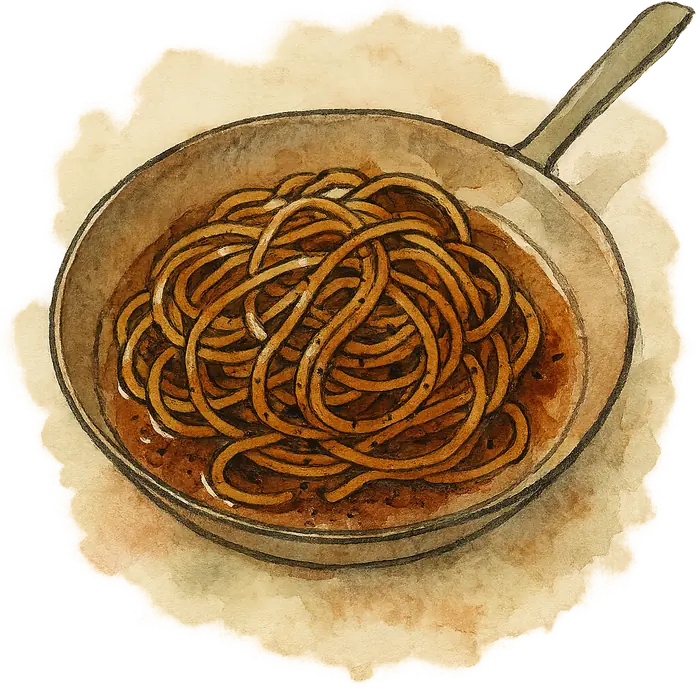
A watercolour of glossy dark-sauced spaghetti twirled in a pan, flecked with coarse black pepper
Generated with OpenAI gpt-image-1
Adapted from Nigella Lawson's Marmite spaghetti, from Nigellissima (2012), which is butter, Marmite and pasta water emulsified together

Spaghetti with yeast extract

An established dish converted to shelf-stable ingredients. Every substitution is documented below.

How long it keeps

About 6 months, set by Vegetable oil (sunflower or rapeseed), though 1 of 4 ingredients has no sourced figure, so the real limit may be shorter.

Indicative, for planning a build before you buy. The answer for a pack you already own is the best before date printed on it, and that only holds if it has been stored as the label says.

Serves
2
Burners
1
Pans
1
Water
1.6 L
Active
5 min
Total
14 min

Ingredients

Four ingredients, one pan, and it tastes like it took far longer. It is also the best argument on this site for keeping a jar of yeast extract in the box.

The trick is emulsion, not melting. Yeast extract stirred into hot oil seizes into a sticky lump. Loosened with a few spoonfuls of the starchy water the pasta is cooking in, it turns into a smooth glossy sauce that coats every strand. That starch is doing real work and it is free.

  1. Pasta into well-salted boiling water. Nothing unusual.
  2. While it cooks, put the oil and yeast extract in a mug or the corner of the pan lid and work them together with a fork. It will look wrong. Add two tablespoons of the pasta water and keep working until it goes smooth and glossy.
  3. Drain the pasta but keep a mugful of the water. This is the step people skip and then wonder why the sauce slides off.
  4. Pasta back in the hot pan, sauce over, and toss hard for thirty seconds, adding splashes of the reserved water until it clings.
  5. A lot of black pepper.

Do not add salt at the end. Yeast extract is around 4,300 mg of sodium per 100 g and 12 g of it is most of a day’s allowance already. Taste before you reach for anything.

If it tastes thin, it wants more pasta water and more tossing rather than more yeast extract. The sauce is built by agitation.

What this was adapted from

Nigella Lawson's Marmite spaghetti, from Nigellissima (2012), which is butter, Marmite and pasta water emulsified together

  • butter → vegetable oil

    Butter is the one thing the original really wants and the one thing a cupboard cannot keep. Oil emulsifies with the starchy water just as well, and the yeast extract is carrying the savoury weight anyway. What is lost is the dairy roundness, which is real but is not the point of the dish.

  • grated Parmesan to finish → nothing, and more black pepper

    Hard cheese keeps for weeks rather than months once cut, and the dish is already extremely savoury. Pepper gives it the edge the cheese was providing.